 Gender Reassignment
PRP Therapy In Mumbai
Platelet-rich plasma injections that strengthen follicles and slow hair fall.
PRP Therapy for Hair Loss in Mumbai
Hair loss is often a gradual process that begins long before noticeable baldness develops. As hair follicles become weaker, they produce thinner, shorter, and less pigmented hairs, reducing overall hair density. In many individuals, follicles are not immediately destroyed but instead become biologically less active. At this stage, regenerative treatments may help support follicular function and slow further progression of hair thinning.
Platelet-Rich Plasma (PRP) Therapy is a regenerative, non-surgical treatment that utilizes components derived from your own blood to support scalp health and stimulate weakened hair follicles. Rather than transplanting new hair or replacing lost follicles, PRP works by delivering a concentrated preparation of platelets containing naturally occurring growth factors that participate in tissue repair and cellular communication.
Because the treatment uses the patient's own blood, the risk of allergic reactions or immune rejection is extremely low. PRP has been widely used across several medical specialties, including orthopaedics, sports medicine, dentistry, wound healing, and aesthetic medicine. In hair restoration, it is commonly used either as a standalone treatment for early-stage hair thinning or as an adjunct to procedures such as hair transplantation.
Although PRP cannot regenerate follicles that have already disappeared or reverse advanced baldness, it may help improve the quality, thickness, and growth of existing hair in appropriately selected patients.
What Is PRP Therapy?
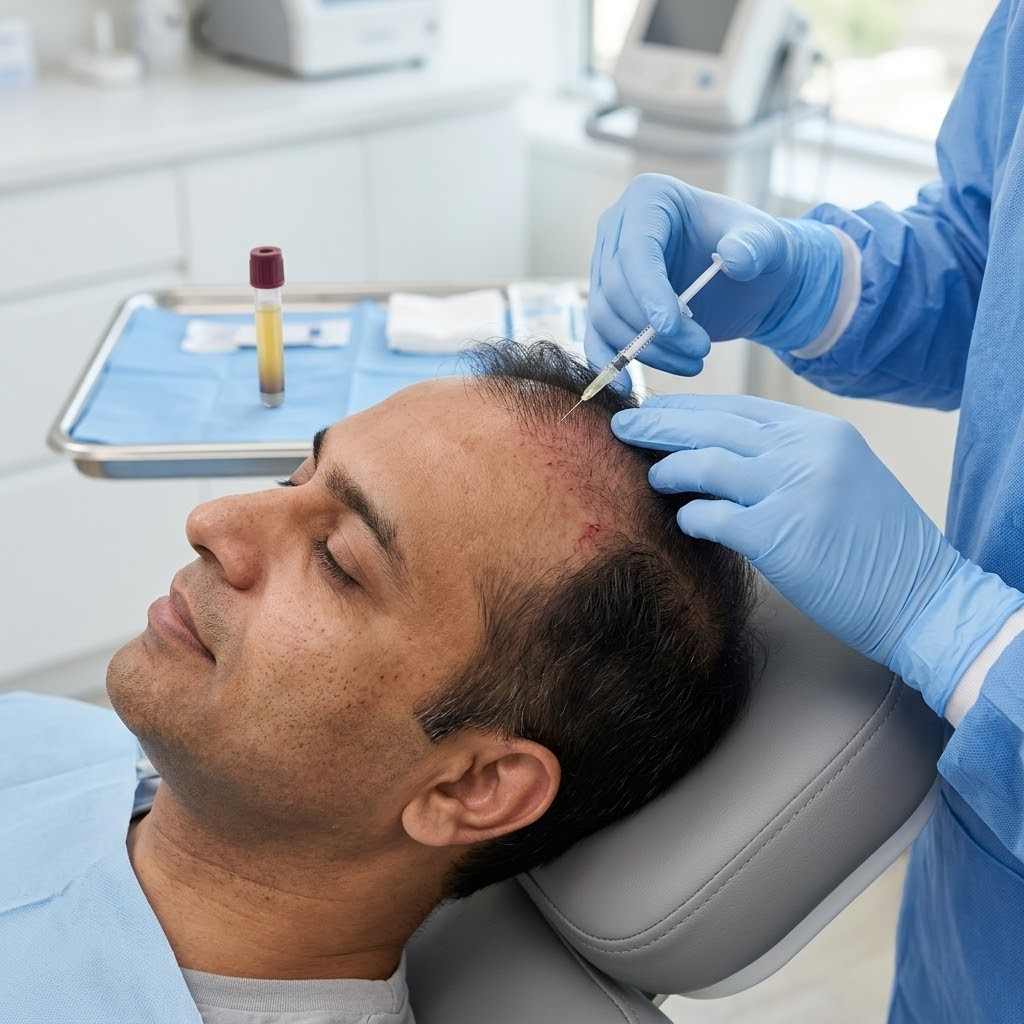
Platelet-Rich Plasma (PRP) Therapy is a regenerative medical treatment in which a concentrated portion of your own blood containing platelets is prepared and injected into targeted areas of the scalp.
Blood consists of several components, including:
Red blood cells.
White blood cells.
Plasma.
Platelets.
While platelets are primarily known for helping blood clot after injury, they also contain numerous biologically active proteins known as growth factors.
These growth factors play an important role in:
Tissue repair.
Blood vessel formation.
Cellular communication.
Collagen production.
Healing responses.
During PRP therapy, these naturally occurring growth factors are concentrated and introduced into areas of the scalp where hair follicles have become weakened but remain viable.
The objective is to create a healthier biological environment that supports follicular activity rather than replacing missing follicles.
How Does Hair Loss Develop?
Hair follicles naturally cycle through phases of growth, rest, and shedding throughout life.
In androgenetic alopecia, the most common form of hair loss, genetically susceptible follicles gradually become sensitive to dihydrotestosterone (DHT).
This process leads to follicular miniaturization, in which:
Hair shafts become thinner.
Growth cycles become shorter.
Resting phases become longer.
Hair density gradually decreases.
Follicles eventually stop producing visible hair.
Importantly, many follicles remain alive for years before becoming permanently inactive.
PRP is intended to support these weakened follicles during this stage by creating a biologically favourable environment that may encourage healthier follicular activity.
However, once follicles have completely disappeared, PRP cannot generate entirely new hair follicles.
How Does PRP Therapy Work?
PRP therapy works by concentrating the body's own naturally occurring growth factors and delivering them directly into areas of the scalp where hair follicles require biological support.
Although researchers continue studying the precise mechanisms involved, several biological processes are believed to contribute.
Blood Collection
A small sample of blood is collected from the patient in a manner similar to a routine blood test.
Centrifugation
The collected blood is placed into a specialized centrifuge that spins at high speed.
This process separates the different blood components according to their density, allowing platelet-rich plasma to be isolated from the remaining blood cells.
Platelet Concentration
The resulting PRP contains a higher concentration of platelets than normally found in circulating blood.
These platelets contain naturally occurring growth factors and bioactive proteins involved in tissue repair.
Scalp Injection
The prepared PRP is carefully injected into selected areas of the scalp where hair follicles are thinning.
These injections deliver concentrated biological signaling molecules directly into the tissue surrounding existing follicles.
Follicular Support
The goal is to improve the biological environment around weakened follicles by supporting tissue repair, improving local blood supply, and encouraging healthier follicular function.
What Growth Factors Are Present in PRP?
Platelets contain numerous naturally occurring biological proteins involved in healing and tissue regeneration.
Some of the most studied growth factors found within PRP include:
Platelet-Derived Growth Factor (PDGF)
Supports tissue repair and cellular regeneration following injury.
Vascular Endothelial Growth Factor (VEGF)
Promotes the formation of new blood vessels, helping improve nutrient and oxygen delivery.
Transforming Growth Factor Beta (TGF-β)
Participates in tissue remodeling and wound healing.
Epidermal Growth Factor (EGF)
Supports cellular growth and repair within the skin and surrounding tissues.
Insulin-Like Growth Factor (IGF)
Contributes to normal cellular growth and may support healthy follicular activity.
Together, these biological molecules participate in complex healing pathways that may help create a healthier environment for existing hair follicles.
Who Is a Good Candidate for PRP Therapy?
PRP is generally most effective when hair follicles remain alive but have become weaker over time.
You may be a suitable candidate if you:
Have early-stage male pattern hair loss.
Have early-stage female pattern hair loss.
Notice gradual hair thinning.
Have diffuse hair shedding.
Wish to complement hair transplant surgery.
Prefer a non-surgical treatment.
Are in good general health.
PRP is usually less effective for completely bald areas where follicles have already been permanently lost.
A detailed scalp examination helps determine whether viable follicles remain capable of responding to regenerative therapy.
What Conditions Can PRP Therapy Treat?
PRP is commonly used as part of a comprehensive hair restoration strategy for selected forms of hair loss.
Male Pattern Hair Loss
Supports weakened follicles affected by androgenetic alopecia during the earlier stages of hair loss.
Female Pattern Hair Loss
May improve hair thickness and density in selected female patients with diffuse thinning.
Diffuse Hair Thinning
Can be considered when widespread thinning occurs while follicles remain biologically active.
Hair Transplant Support
PRP is frequently incorporated before, during, or after hair transplantation to support healing and graft recovery according to the surgeon's treatment protocol.
General Hair Quality
Some patients seek PRP to improve the overall appearance, strength, and thickness of existing hair.
Personalized PRP Therapy
Not every patient experiencing hair loss requires the same treatment approach. The stage of hair loss, scalp health, follicular viability, age, hormonal influences, medical history, and long-term goals all influence whether PRP is likely to provide meaningful benefit.
At Hair & Shape Clinic, treatment planning begins with identifying the underlying cause of hair loss rather than recommending PRP for every patient. Your scalp is carefully assessed to determine whether hair follicles remain viable, whether additional treatments such as medications or hair transplantation may be appropriate, and how PRP fits within your overall hair restoration strategy.
The objective is to recommend the treatment that offers the greatest long-term benefit based on your individual pattern of hair loss rather than applying a one-size-fits-all approach.
What Happens During a PRP Therapy Session?
PRP Therapy is a minimally invasive, outpatient procedure that usually takes less than an hour to complete. Since the treatment uses your own blood, there is no need for synthetic medications or implanted materials.
Unlike hair transplant surgery, PRP does not involve relocating hair follicles. Instead, it focuses on delivering concentrated platelet-derived growth factors into areas where existing follicles have become weakened but remain alive.
The treatment generally follows these stages.
Step 1: Hair & Scalp Assessment
Before treatment begins, your scalp is carefully examined to identify the pattern and cause of hair loss.
Your doctor evaluates:
Hair density.
Areas of thinning.
Hair shaft quality.
Scalp health.
Medical history.
Previous hair treatments.
Degree of follicular miniaturization.
This assessment helps determine whether PRP is likely to provide meaningful benefit or whether another treatment may be more appropriate.
Step 2: Blood Collection
A small amount of blood is drawn from your arm, similar to a routine blood test.
The amount collected depends on the preparation system being used but is generally only a small volume.
Step 3: PRP Preparation
The blood sample is placed into a specialized centrifuge.
By spinning at high speed, the centrifuge separates blood into different layers according to density.
The platelet-rich plasma is then carefully isolated while maintaining sterile conditions.
The resulting preparation contains a higher concentration of platelets than circulating blood.
Step 4: Scalp Preparation
The treatment area is cleaned thoroughly.
Depending on individual sensitivity, a topical numbing cream or local anaesthetic may be applied to improve comfort during the injections.
Step 5: PRP Injection
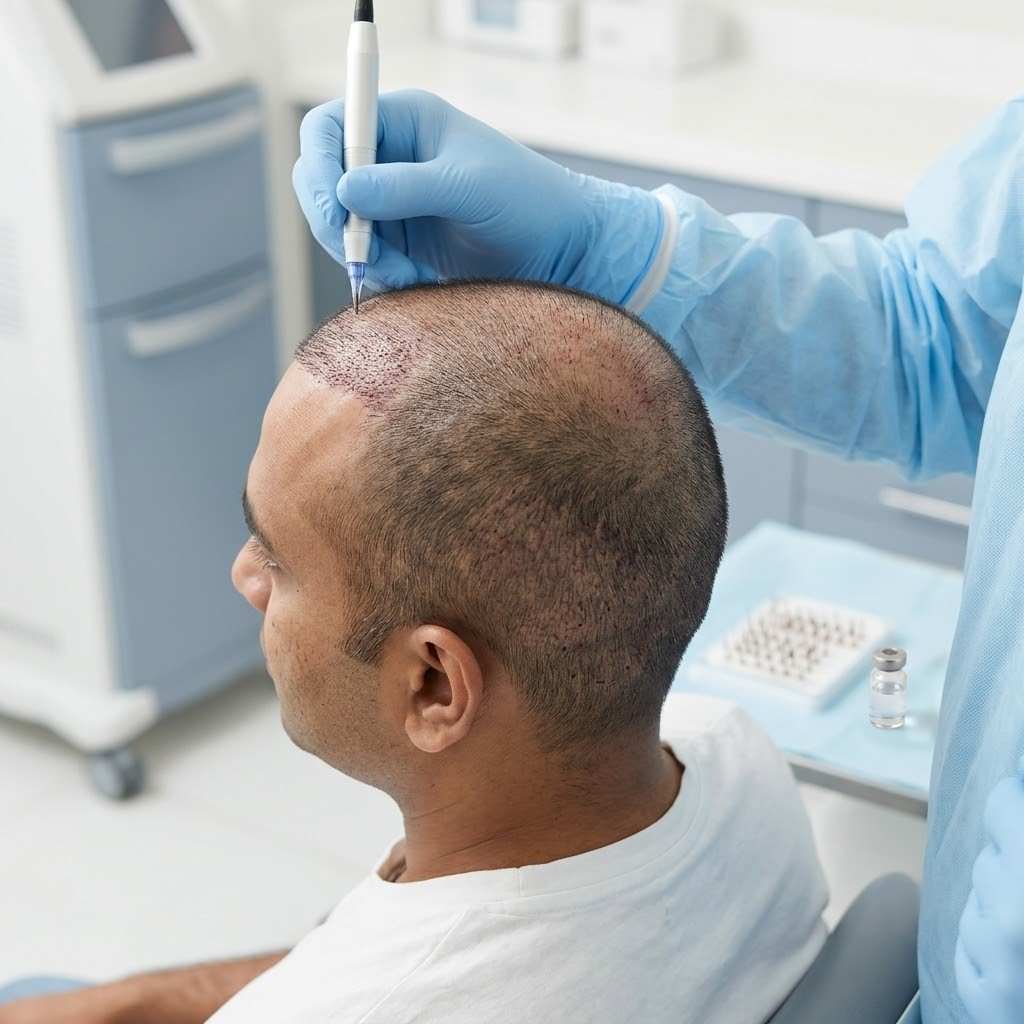
The prepared PRP is injected into targeted areas of the scalp using fine needles.
Multiple small injections are placed throughout regions affected by hair thinning to distribute growth factors evenly around weakened follicles.
The entire injection process usually takes only a short time.
How Does PRP Support Hair Growth?
PRP does not create new hair follicles or permanently stop genetic hair loss.
Instead, it aims to improve the biological environment surrounding existing follicles.
Researchers believe several mechanisms may contribute to its effects.
Improved Cellular Communication
Growth factors released by activated platelets help coordinate cellular repair processes within the scalp.
Increased Blood Supply
Certain growth factors encourage the formation of small blood vessels, improving oxygen and nutrient delivery to surrounding follicles.
Support for Hair Follicles
The regenerative proteins may help support weakened follicles during the active stages of hair growth.
Healthier Scalp Environment
PRP contributes to normal tissue repair and healing responses within the scalp.
Improved Hair Quality
Some patients experience improvements in hair thickness, strength, and overall hair quality as healthier follicles continue producing hair.
Although research continues to evolve, PRP appears to provide the greatest benefit when follicles remain biologically active rather than permanently lost.
What Results Can You Expect After PRP Therapy?
PRP produces gradual improvements because hair grows slowly through its natural biological cycle.
The treatment does not generate immediate visible changes.
Instead, improvements occur as existing follicles progress through successive growth phases.
Patients may notice:
Reduced Hair Shedding
Some individuals observe a gradual reduction in excessive daily hair fall after treatment.
Improved Hair Thickness
Existing hairs may gradually appear thicker as weakened follicles produce healthier hair shafts.
Better Hair Density
Areas of diffuse thinning may appear fuller as more follicles actively produce visible hair.
Healthier Hair Quality
Hair may become stronger, shinier, and more resilient over time.
Enhanced Hair Transplant Recovery
When incorporated into hair restoration surgery, PRP may help support healing and graft recovery according to the surgeon's treatment protocol.
Individual responses vary depending on age, genetics, underlying cause of hair loss, follicular health, and overall treatment plan.
What Is Recovery Like After PRP Therapy?
Recovery following PRP is usually quick because the treatment is minimally invasive.
Most patients resume normal daily activities shortly after the procedure.
Temporary effects may include:
Mild scalp tenderness.
Temporary redness.
Slight swelling.
Minor pinpoint bleeding.
Temporary sensitivity at injection sites.
These effects usually resolve within a short period.
Consultation & Hair Analysis
Your scalp and pattern of hair loss are evaluated to determine whether PRP is appropriate.
Blood Collection & PRP Preparation
A blood sample is collected and processed to isolate platelet-rich plasma.
PRP Treatment
The prepared PRP is injected into selected areas of the scalp.
Early Healing
Minor tenderness and redness gradually improve while the biological healing response begins.
Follicular Response
Growth factors begin interacting with existing follicles and surrounding scalp tissue.
Progressive Hair Improvement
Hair quality and density gradually improve over the following months in appropriately selected patients.
Are There Any Risks or Limitations?
PRP Therapy is generally considered a safe procedure when performed by qualified medical professionals using sterile techniques.
Because PRP is prepared from your own blood, allergic reactions and immune rejection are extremely uncommon.
Like any injectable treatment, however, temporary side effects may occur.
These may include:
Mild discomfort.
Temporary swelling.
Redness.
Bruising.
Scalp tenderness.
Minor bleeding at injection sites.
Less commonly, infection or temporary inflammation may occur.
It is equally important to understand the limitations of PRP.
PRP cannot:
Create new hair follicles.
Reverse advanced baldness.
Replace hair transplant surgery where follicles have already disappeared.
Permanently stop genetic hair loss.
The treatment is generally most beneficial for patients with thinning hair and living follicles that remain capable of responding to regenerative stimulation.
How Much Does PRP Therapy Cost in Mumbai?
The cost of PRP Therapy depends on the individualized treatment plan rather than a fixed fee.
Several factors influence pricing, including:
Extent of hair thinning.
Number of treatment sessions recommended.
Type of PRP preparation system used.
Whether PRP is combined with other treatments.
Long-term hair restoration strategy.
Following a detailed consultation, your doctor will explain the recommended treatment schedule, expected outcomes, maintenance requirements, and associated costs before treatment begins.
Why Choose Hair & Shape for PRP Therapy?
Successful PRP treatment depends on more than simply preparing platelet-rich plasma. Proper patient selection, accurate diagnosis, standardized preparation techniques, and individualized treatment planning all influence the quality of care.
At Hair & Shape Clinic, every patient undergoes a detailed evaluation to identify the underlying cause of hair loss before PRP is recommended. Factors such as follicular viability, scalp health, pattern of hair thinning, medical history, and previous treatments are carefully assessed to determine whether PRP is likely to provide meaningful benefit.
Rather than recommending regenerative therapy for every patient, the emphasis is on selecting the treatment approach that best supports long-term hair health and realistic outcomes.
Why Does Personalized PRP Planning Matter?
Hair loss occurs for many different reasons, and not every patient responds to regenerative therapy in the same way.
Hair Loss Has Multiple Causes
Genetics, hormonal changes, nutritional deficiencies, stress, and certain medical conditions can all contribute to hair thinning.
Timing Influences Results
PRP generally provides greater benefit when follicles remain alive but have become weaker rather than completely inactive.
Treatment Plans Should Be Individualized
Some patients benefit from PRP alone, while others may require medications, hair transplantation, or a combination of therapies.
Maintenance May Be Necessary
Because genetic hair loss often continues over time, some individuals may require maintenance treatments as part of a long-term hair restoration strategy.
Long-Term Hair Health Is the Goal
The focus is not simply on temporary improvement but on preserving healthy follicles and supporting sustainable hair quality whenever possible.
International Patients Seeking PRP Therapy in Mumbai
Hair & Shape Clinic welcomes patients from across India and internationally seeking non-surgical regenerative treatments for hair loss.
Our international patient pathway is designed to simplify consultation, treatment planning, and follow-up for patients travelling to Mumbai.
Before You Travel
Virtual consultation, medical history review, and scalp photographs help determine whether PRP Therapy is appropriate before your visit.
During Your Stay
Your appointment includes consultation, blood collection, PRP preparation, scalp treatment, and detailed post-procedure guidance.
Returning Home
Depending on your personalized treatment plan, follow-up sessions may be recommended. Continued guidance regarding scalp care, maintenance therapy, and long-term hair restoration helps support the best possible outcome regardless of where you live.
What to Expect
Consultation
A detailed assessment of your goals, suitability, and a personalised plan.
Preparation
Clear pre-treatment guidance so you arrive fully prepared and at ease.
The Procedure
Your treatment, performed by our specialists with comfort and safety first.
Aftercare
Structured recovery support and follow-ups to protect your results.
Frequently Asked Questions
Everything you need to know about PRP Therapy. Still curious? Our team is one message away.
PRP is generally most beneficial when active hair follicles are still present. Advanced baldness may require other treatment options, including hair transplantation.
Downtime is minimal. Most patients return to normal daily activities shortly after treatment, although your doctor may provide temporary aftercare instructions.
Yes. PRP is commonly incorporated into comprehensive hair restoration plans and may support scalp health before or after hair transplant surgery where appropriate.
PRP is designed to support healthier follicular function and may help reduce ongoing hair thinning in suitable patients. Hair loss is often progressive, so maintenance treatments or additional therapies may be recommended.
Hair biology changes gradually. Many patients first notice reduced shedding, followed by progressive improvements in hair quality and density over the following months.
The number of sessions varies depending on the stage of hair loss, scalp condition, and treatment goals. Your personalized treatment plan will be discussed during consultation.
Most patients experience only mild discomfort during the injections. The procedure is generally well tolerated, and your doctor may recommend measures to improve comfort during treatment.
PRP (Platelet-Rich Plasma) Hair Treatment is a regenerative procedure that uses concentrated platelets from your own blood to support scalp health, strengthen existing hair follicles, and encourage healthier hair growth.
Begin Your PRP Therapy Journey
Book a consultation today and let our specialists craft a plan built entirely around you.