 Gender Reassignment

Mustache / Beard Creation In Mumbai
Customized follicle placement to sculpt and build a dense, natural-looking beard or mustache.
Mustache & Beard Hair Transplant in Mumbai
Restore Natural Facial Hair with Precision Beard & Mustache Hair Transplantation
Facial hair has long been associated with personality, maturity, masculinity, and self-expression. Whether it's a well-defined beard, a full mustache, or a sculpted goatee, facial hair plays a significant role in framing the face and enhancing overall appearance. However, not everyone naturally develops the facial hair density or pattern they desire.
Some individuals experience naturally sparse facial hair due to genetics, while others may develop patchy growth following injury, burns, surgery, infections, or certain medical conditions. In many cases, facial hair may simply fail to develop completely despite reaching adulthood, leading to frustration and reduced confidence.
A beard and mustache hair transplant offers a permanent solution by carefully transplanting healthy hair follicles from the scalp into areas lacking facial hair. Modern techniques allow surgeons to recreate natural beard density, define facial contours, fill patchy areas, restore sideburns, or completely reconstruct a beard with remarkable precision.
Unlike temporary cosmetic solutions or topical products, transplanted facial hair grows naturally, can be trimmed, shaved, and styled, and continues to behave like normal facial hair once fully established.
At Hair & Shape Clinic, Dr. Umang Kothari designs every beard and mustache transplant according to the patient's facial proportions, existing hair characteristics, desired beard style, donor availability, and long-term aesthetic goals. Every follicle is strategically placed to recreate natural growth direction, density, and symmetry, producing results that appear authentic from every angle.
What Is A Beard & Mustache Hair Transplant?
A beard and mustache hair transplant is a specialised microsurgical procedure that restores facial hair by transplanting healthy hair follicles from the scalp into areas of the face where hair is absent, sparse, or uneven.
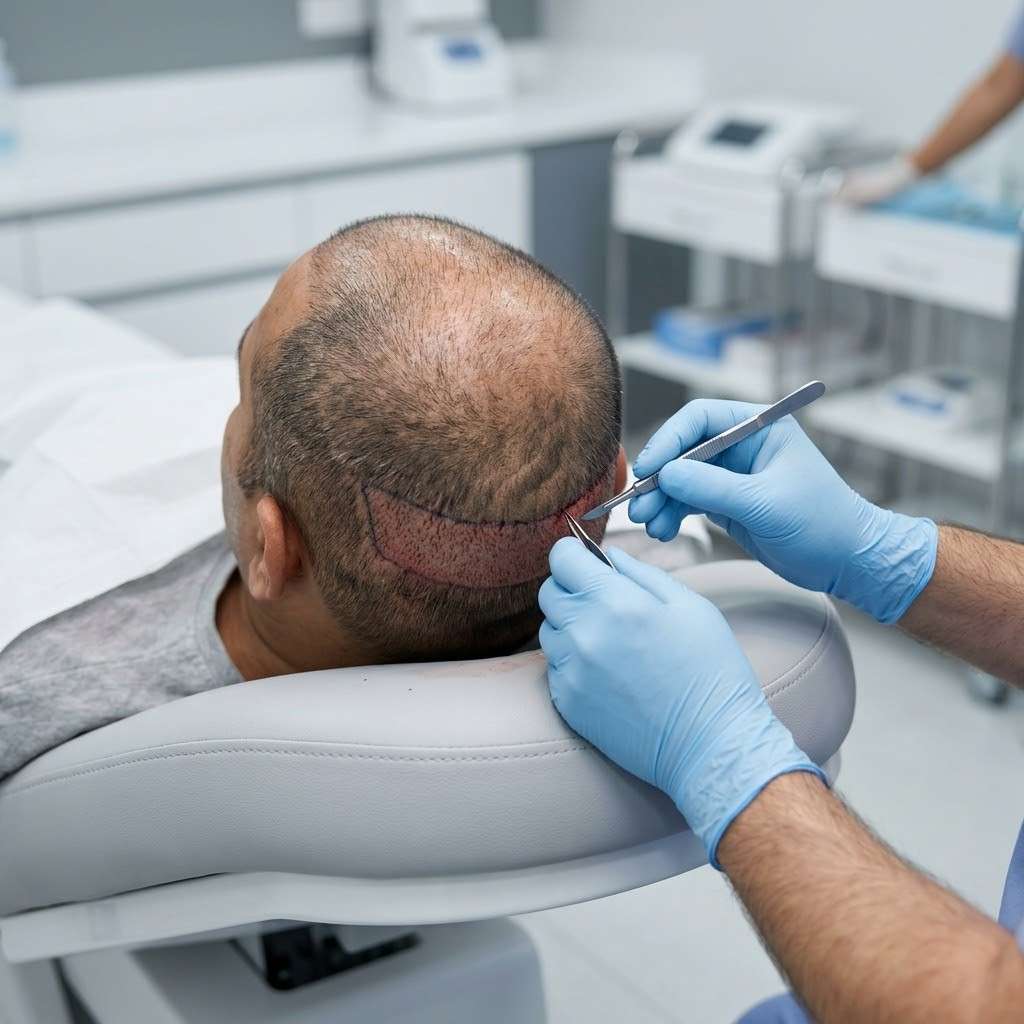
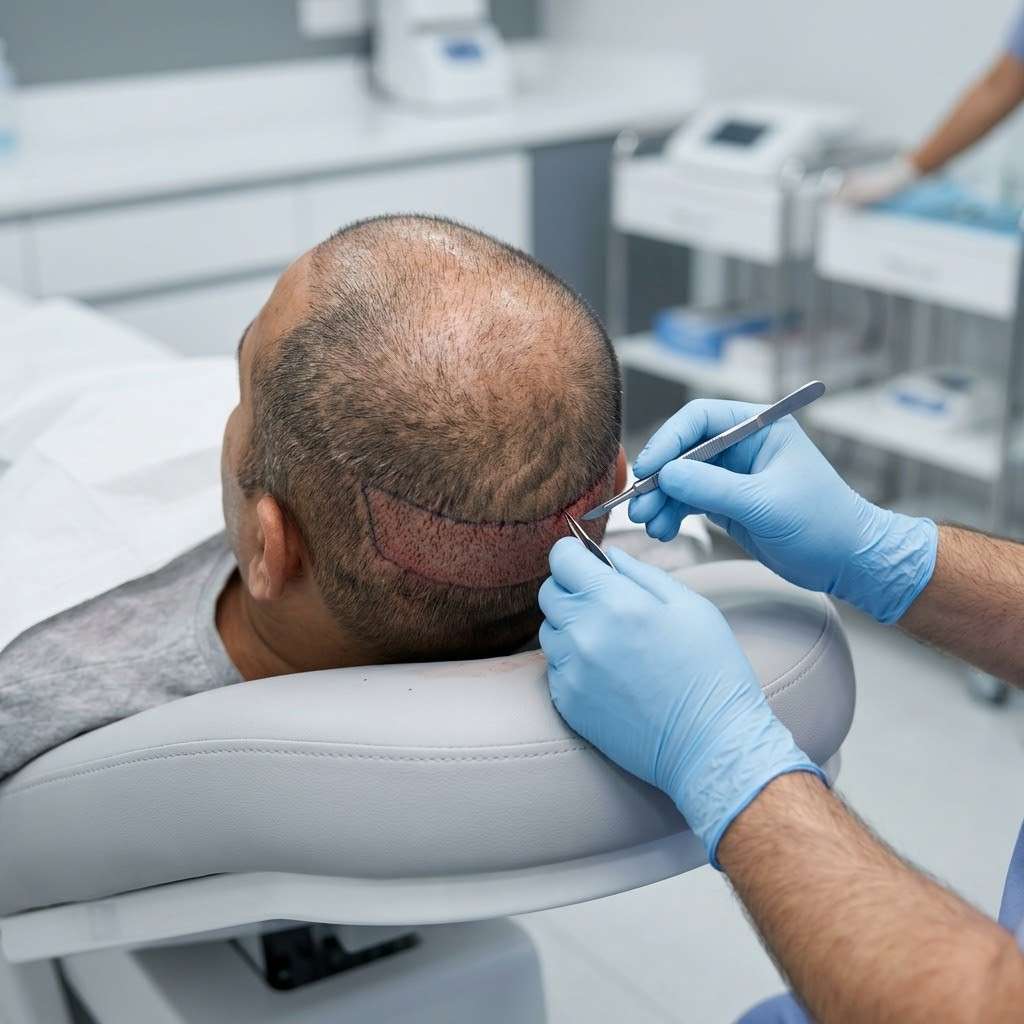
The procedure uses naturally growing follicular units harvested from the permanent donor region, usually located at the back of the scalp. These follicles are then meticulously implanted into the beard, mustache, sideburns, or other facial regions while carefully replicating the natural angle, direction, and density of facial hair growth.
Once healed, the transplanted follicles establish a new blood supply and continue producing hair permanently, allowing patients to groom their facial hair naturally.
Why Do Some People Have Sparse Beard Or Mustache Growth?
Facial hair growth varies significantly from one individual to another.
Several factors may influence beard density and distribution.
Common causes include:
Genetic predisposition
Hormonal differences
Naturally low follicular density
Facial scars
Burns or traumatic injuries
Previous surgery
Certain skin conditions
Congenital absence of facial hair
Patchy beard growth
Stable scarring alopecia affecting the beard region
Understanding the underlying cause helps determine whether hair transplantation is the most appropriate treatment.
Who Can Benefit From Beard Or Mustache Hair Transplant Surgery?
Beard transplantation may be suitable for individuals seeking to improve facial hair density, redefine facial contours, or restore hair lost due to injury or previous procedures.
Patients commonly seek treatment for:
Patchy beard growth
Thin mustache
Incomplete beard development
Sparse sideburns
Beard asymmetry
Facial scar camouflage
Burn scar reconstruction
Goatee enhancement
Jawline definition
Complete beard restoration
Every treatment plan is customised according to individual facial anatomy and aesthetic preferences.
How Does A Beard Hair Transplant Work?
The procedure follows the same biological principles as scalp hair transplantation.
Healthy follicles are carefully harvested from the donor area and implanted into selected facial regions.
Following transplantation:
Tiny recipient sites begin healing.
New blood vessels nourish each graft.
The transplanted follicles establish themselves within the facial tissue.
Temporary shedding of transplanted hairs may occur.
New permanent facial hair gradually begins growing over the following months.
Because the transplanted follicles retain the characteristics of the donor area, they continue producing hair naturally throughout life.
Facial Hair Anatomy And Growth Direction
Unlike scalp hair, facial hair grows in highly specific directions that vary across different regions of the face.
For natural-looking outcomes, every transplanted follicle must mimic these natural growth patterns.
Growth angles differ between:
Mustache
Upper lip
Chin
Goatee
Jawline
Cheeks
Sideburns
Neck beard
Even slight deviations in angle or direction may become noticeable once the beard grows, making artistic planning and microsurgical precision essential.
Planning A Natural Beard Design
Every beard transplant begins with comprehensive facial analysis rather than simply increasing hair density.
The design process considers:
Facial proportions
Jawline definition
Chin projection
Existing facial hair
Beard symmetry
Hair texture
Hair colour
Hair curl pattern
Desired beard style
Ethnicity
Age
The objective is to create a beard that complements the patient's facial structure while maintaining a natural appearance.
Donor Hair Selection
Not every scalp hair is equally suitable for facial transplantation.
Donor hair selection considers several characteristics, including:
Hair thickness
Hair texture
Curl pattern
Colour match
Follicular unit composition
Growth characteristics
The chosen donor area should provide hair that closely resembles natural beard hair to ensure seamless integration after growth.
Follicular Unit Extraction (FUE) For Beard Transplant
Most modern beard transplants are performed using Follicular Unit Extraction (FUE).
This minimally invasive technique involves harvesting individual follicular units using specialised microsurgical instruments without removing a strip of scalp.
Each follicular unit may contain:
One hair
Two hairs
Three hairs
Occasionally four hairs
Single-hair grafts are typically used for finer, softer transition zones, while multi-hair grafts may be strategically placed in areas requiring greater density, depending on the desired beard design.
Because follicles are extracted individually, FUE generally heals with tiny dot-like scars that become difficult to notice after recovery.
Areas That Can Be Restored
Beard transplantation can restore or enhance multiple facial regions.
These include:
Full beard
Mustache
Goatee
Sideburns
Chin beard
Jawline beard
Cheek beard
Beard scar correction
Facial burn reconstruction in selected cases
Each area requires different implantation angles, densities, and follicular distribution to replicate natural facial hair growth.
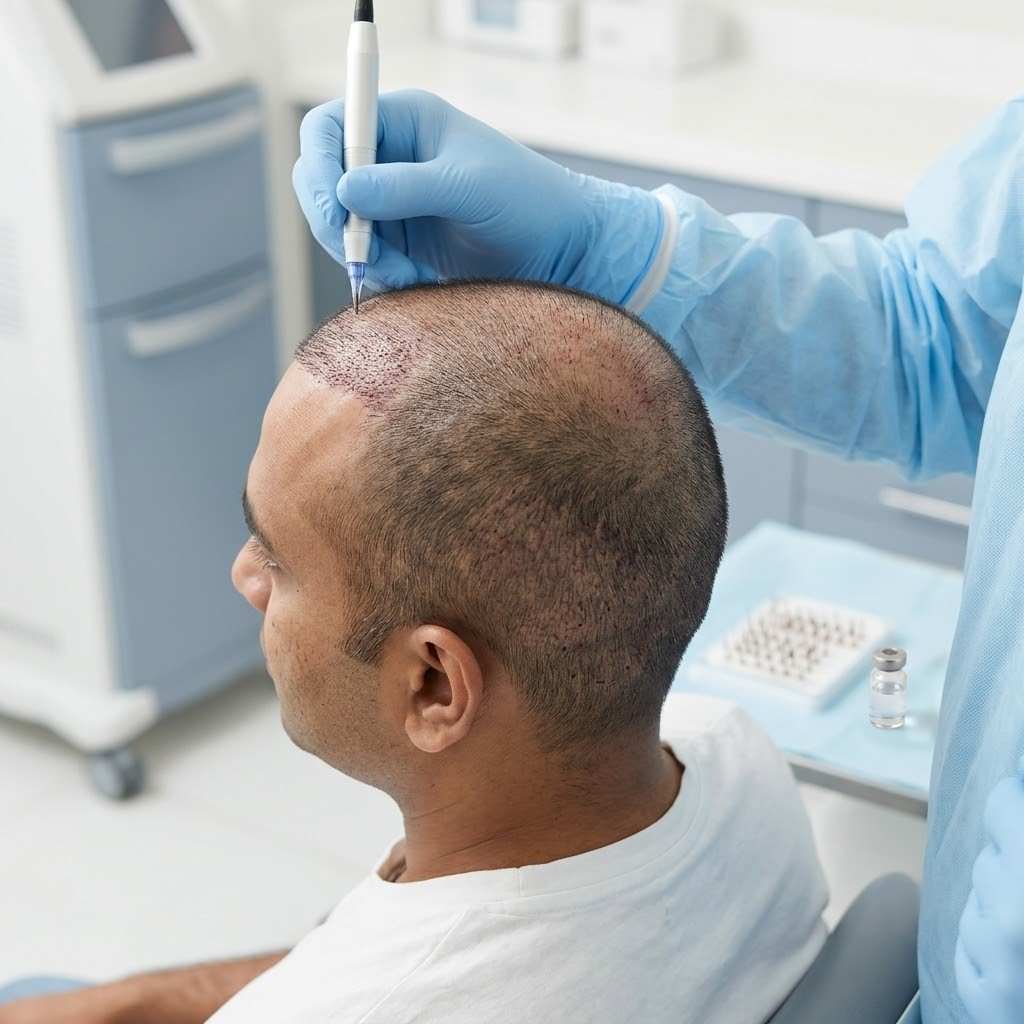
Recipient Site Creation And Graft Placement
The success of a beard or mustache transplant depends not only on healthy grafts but also on meticulous recipient site creation.
Each tiny recipient site determines how the transplanted hair will emerge, grow, and blend with the surrounding facial hair.
The surgeon carefully plans:
Hair angle
Growth direction
Follicular orientation
Hair density
Natural spacing
Facial symmetry
Unlike scalp hair, facial hair often grows almost flat against the skin in many regions. Replicating these subtle growth patterns requires exceptional microsurgical precision and artistic judgement.
How Many Grafts Will I Need?
Every patient has unique facial hair goals, and the number of grafts required varies accordingly.
The estimated graft requirement depends on:
Existing facial hair
Desired beard style
Size of the treatment area
Hair thickness
Hair texture
Donor density
Required facial hair density
Smaller procedures such as mustache enhancement may require relatively few grafts, whereas complete beard reconstruction typically requires significantly more.
A personalised consultation allows accurate treatment planning and graft estimation.
What Happens After The Procedure?
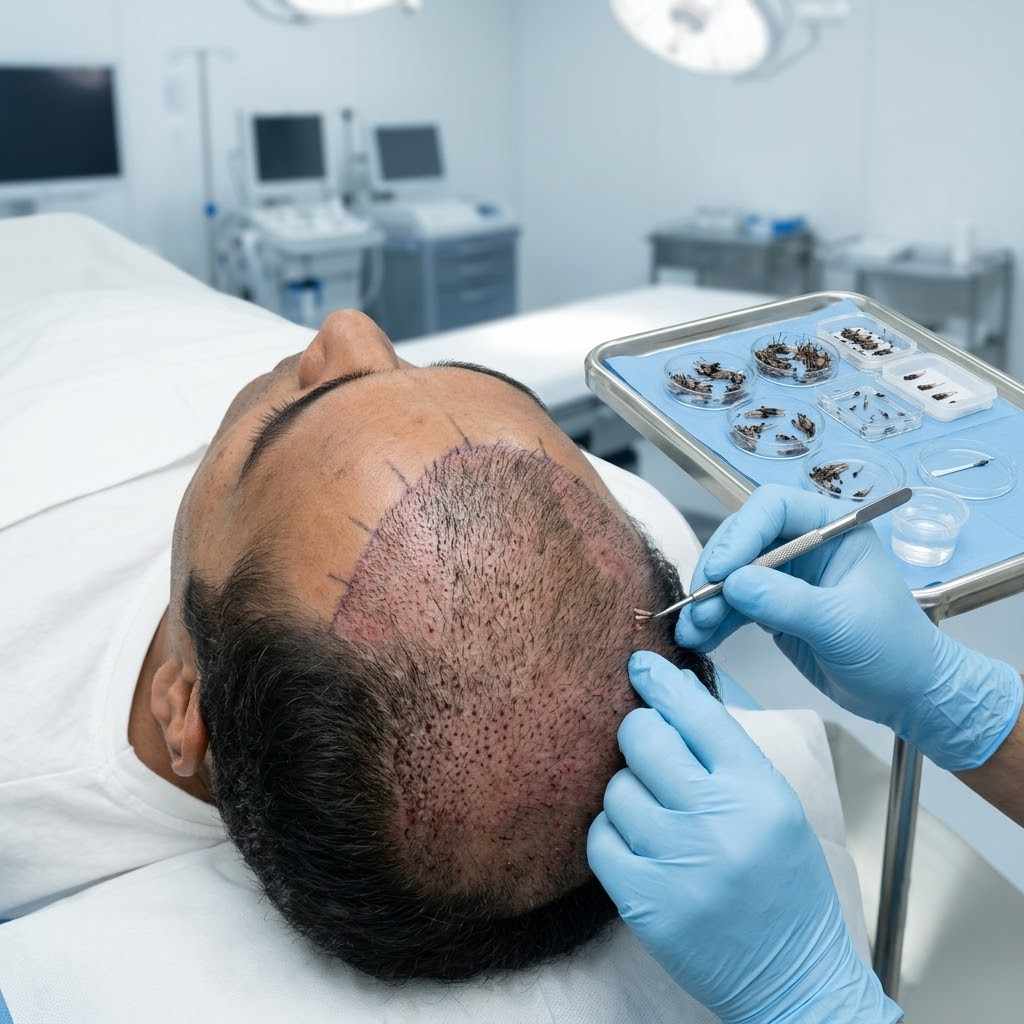
Following the transplant, the newly placed grafts begin integrating with the surrounding facial tissues.
During the initial healing period:
Tiny scabs form around each graft.
Mild redness may be present.
Minor swelling occasionally develops.
The transplanted follicles establish a new blood supply.
Healing progresses steadily over the following days.
Patients receive detailed postoperative instructions to support optimal graft survival and recovery.
Temporary Shedding Is Normal
Many patients become concerned when transplanted facial hair sheds within the first few weeks.
This is an expected part of the healing process.
The transplanted hair shafts may temporarily fall out while the follicles remain alive beneath the skin.
Once the follicles enter a new growth cycle, permanent facial hair gradually begins emerging over the following months.
This temporary shedding does not indicate treatment failure.
Beard Hair Growth Timeline
Hair restoration is a gradual biological process.
Although every patient heals differently, the general timeline includes:
First Week
Mild swelling gradually settles.
Tiny scabs begin falling away naturally.
Most recipient sites heal rapidly.
Two To Four Weeks
Temporary shedding of transplanted hairs commonly occurs.
The follicles remain healthy beneath the skin.
Three To Four Months
New facial hair begins emerging.
Initially, the hairs may appear fine before gradually thickening.
Six To Nine Months
Noticeable improvements in beard density and overall coverage become visible.
The transplanted hairs become stronger and more consistent.
Twelve To Eighteen Months
Most patients appreciate the final cosmetic result as the transplanted facial hair fully matures in thickness, texture, and density.
Recovery After Beard Hair Transplant
Recovery following beard transplantation is generally straightforward.
Patients are advised to follow specific aftercare instructions regarding:
Facial cleansing
Sleeping position
Physical activity
Sun exposure
Shaving
Skin care
Follow-up visits
Most patients resume routine daily activities within a few days, although shaving the transplanted area should only be resumed after the surgeon advises it is safe.
Can Transplanted Beard Hair Be Shaved And Styled?
Yes.
Once the transplanted follicles have fully healed and entered their normal growth cycle, they behave like natural facial hair.
Patients can:
Shave
Trim
Shape
Comb
Style
Grow different beard lengths
Regular grooming can be performed according to personal preference.
Are Beard Hair Transplant Results Permanent?
Because the transplanted follicles are obtained from genetically stable donor areas of the scalp, they generally continue producing hair permanently after successful healing.
However, maintaining healthy skin and following postoperative advice remain important for achieving optimal long-term outcomes.
Benefits Of Beard And Mustache Hair Transplant
A beard transplant offers several long-term advantages for appropriately selected patients.
Potential benefits include:
Permanent facial hair restoration
Natural beard density
Improved facial symmetry
Better jawline definition
Restoration of patchy beard areas
Scar camouflage
Fuller mustache
Improved confidence
Ability to shave and style normally
Long-lasting natural results
The final appearance depends upon donor quality, surgical planning, healing, and individual hair characteristics.
Is Beard Hair Transplant Safe?
Beard transplantation is considered a safe procedure when performed by an experienced surgeon using modern microsurgical techniques.
As with any surgical procedure, temporary side effects may occur.
These can include:
Mild swelling
Temporary redness
Minor discomfort
Temporary numbness
Small scab formation
Temporary shedding of transplanted hair
Infection, although uncommon
Variable hair growth between individual grafts
Careful surgical planning and adherence to postoperative instructions help minimise these risks.
Why Choose Hair & Shape For Beard And Mustache Hair Transplant In Mumbai?
At Hair & Shape Clinic, beard and mustache transplantation is performed with a strong emphasis on precision, facial harmony, and natural aesthetics. Every treatment begins with a detailed assessment of facial proportions, beard growth patterns, donor quality, and the patient's desired appearance to create results that complement individual facial features rather than appearing artificial.
Dr. Umang Kothari utilises advanced Follicular Unit Extraction (FUE) techniques and meticulous graft placement to recreate the natural direction, angle, and density of facial hair. From subtle mustache enhancement to complete beard reconstruction and scar camouflage, every procedure is customised to achieve balanced, long-lasting, and natural-looking outcomes while preserving donor integrity.
Final Thoughts
A beard and mustache hair transplant offers a permanent solution for individuals seeking fuller, more defined, and natural-looking facial hair. Whether addressing patchy growth, restoring hair lost due to scars or injury, or creating a completely new beard design, modern transplantation combines microsurgical precision with artistic planning to achieve results that complement each individual's facial anatomy.
At Hair & Shape Clinic, every beard restoration procedure is carefully tailored to the patient's facial structure, hair characteristics, and long-term aesthetic goals. Through personalised treatment planning, advanced FUE techniques, and meticulous graft placement, Dr. Umang Kothari aims to deliver facial hair restoration that looks natural, grows permanently, and enhances overall facial balance and confidence.
What to Expect
Consultation
A detailed assessment of your goals, suitability, and a personalised plan.
Preparation
Clear pre-treatment guidance so you arrive fully prepared and at ease.
The Procedure
Your treatment, performed by our specialists with comfort and safety first.
Aftercare
Structured recovery support and follow-ups to protect your results.
Begin Your Mustache / Beard Creation Journey
Book a consultation today and let our specialists craft a plan built entirely around you.